Ulcerative Colitis / IBD

HerrFisch

Well-Known Member
Messages
1,064
Re: Mitochondrial problems.

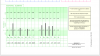
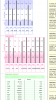
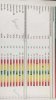
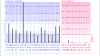
I though I would write down ALL my Labs here. To have everything at one place.

Blue=too low
Red= too high

oxidized LDL 527 ng/ml (range<133) (in APRIL)
oxidized LDL 175 ( in SEPTEMBER)

DAO 16,3 U/ml (range >10)

Blood:
Sodium 1965 mg/l (range 1900-2000)
Potassium 2097 mg/l (range 1750-1850)
Calcium 57,3 (range 59-61)
Magnesium 40,3 (range 34-36)
Copper 0,82 (range 1,1-1,2)
Iron 559 (range440-480)
Zinc 7,3 (range 7,3-7,7)
Selenium 136 (range 100-140)

Blood levels adapted:
Sodium 2158 mg/l (range 1900-2000)
Potassium 1879 (range 1750-1850)
Calcium 62,9 (range 59-61)
Magnesium 38,2 (range 34-36)

Copper 0,84 (range 1,1 -1,2)
Iron 487 (range 440-480)
Zinc 6,5 (range 7,3-7,7)
Selenium 122 (range 100-140)

Dont really know what the difference is between blood levels and blood levels adapted. They do really differ.

Hematocrit 0,48 l/l (range 0,39-0,52)
Lipidperoxidation 35 umol/l (range<200)
(Lipidperoxidation in September 20 umol/l)

Lactate in April 934 umol/l (range <1528)
Lactate in September 1860
Pyruvate in April 272 (range 58-136)
Pyruvate in September 152


CoQ10 APRIL & SEPT 0,48 (range 0,88-1,43)
Cholesterol 142 (range <200)

Biotin >600 (range >200)
Vitamin C 11,7 (range 4,5-24,5 but opitmal 14-25)
Vitamin B6 140 (range 4,1-43,7) I took some p5p back then.
B12 in April 597 (range 200-1000)
B12 in Sep 665
Vitamin D3 25 OH: 148 (range 62-170)
Folic acid 760 (range 480-1210)

CRP 0,31 mg/l (<0,5)
Homocysteine 8,3 umol/l (range <12)
Lipoprotein a <7 (range <75)
malondialdehyde APRIL 3,4 (range 1,2-2,8)
Malondialdehyde SEPT 2,3

intestinal bacteria:
ok : echeria coli, coli biovare, proteus species, klebsiella species, pseudomonas species, enterobacter species, serratia species, hafnia species

too low:
Enterococcus species <1,0 x10^4 (range10^6-10^7)
bifidobacterium species 10^7 (range 10^9-10^11)

Lactobacillus 10^5 (range10^5-10^7)
Bacteroides species 10^9 (range10^9-10^11)

Candida species normal
Cadida albicans normal
Geotrichum candidum normal

fecal ph 6,5 (range 5,8- 6,5)

pancreatic elastase in stool 313 (range>200)
bile acid in stool negative

Calprotectin 44,98 (range <50)
Alpha 1Antitrypsin 51 (range<27,5)

Zonulin 29 (range<55)

Histamine in stool 3504 (range<600)

m2-PK 3,1 (range <4)

Fructose ok
Sorbitol ok

Cortisol
7 AM 4,3 (range 3-9)
1 PM 1,17 (range 0,6 -2,4)
PM 1,91 (range 0,2- 0,8)

New neutransmitter after 5HTP

Serotonin 108 (range 140-230)
Adrenaline 2,59 (range 4-10)
Norephineprin 15,22 (range 32- 55)
Dopamine 79 (range 150 -280)

Kreatinin 494 (range 400-2780)

Estradiol 31 pg/ml (range 11-43)
Progesterone 19 ng/dl (range 5-14)
Testosterone free 12 pg/ml (range 7-36)
Prolactin 18 (4-15)
DHEA-S 259 (range 210-490)


SEPTEMBER 17
T3 4,3 (2-4,4)
T4 1,6 (0,9-1,7)
TSH 2,9

FEB 17
TSH: 4,13
 
Last edited:
HerrFisch

Well-Known Member
Messages
1,064
Re: Mitochondrial problems.

<r><ATTACHMENT filename="IMG_2722.PNG" index="2"><s>[attachment=2]</s>IMG_2722.PNG<e>[/attachment]</e></ATTACHMENT><ATTACHMENT filename="IMG_2723.PNG" index="1"><s>[attachment=1]</s>IMG_2723.PNG<e>[/attachment]</e></ATTACHMENT><ATTACHMENT filename="IMG_2724.PNG" index="0"><s>[attachment=0]</s>IMG_2724.PNG<e>[/attachment]</e></ATTACHMENT></r>
 

Attachments

  • IMG_2722.PNG
    IMG_2722.PNG
    142.7 KB · Views: 102
  • IMG_2723.PNG
    IMG_2723.PNG
    119.5 KB · Views: 102
  • IMG_2724.PNG
    IMG_2724.PNG
    174.9 KB · Views: 99

Aleksandr

Well-Known Member
Messages
1,285
Re: Mitochondrial problems.

<r><QUOTE author="HerrFisch" post_id="1965" time="1508420896" user_id="114"><s>
HerrFisch post_id=1965 time=1508420896 user_id=114 said:
</s>
IMG_2722.PNGIMG_2723.PNGIMG_2724.PNG
<e>
</e></QUOTE>

Looks like classic slow oxidation. Should be an easy one to fix with gbolduev recommendations like fasting. check out this thread:<br/>
<URL url="http://www.hackstasis.com/viewtopic.php?f=10&t=126">http://www.hackstasis.com/viewtopic.php?f=10&t=126</URL></r>
 

HerrFisch

Well-Known Member
Messages
1,064
Re: Mitochondrial problems.

<r>Im not sure If its that easy. <br/>
As mattyb explained to me, Ulcerative Colitis and its mitochondrial fission wont work too well with "speed up metabolism". <br/>
<br/>
Thats why I hoped for <MENTION><s>[mention]</s>gbolduev<e>[/mention]</e></MENTION> knowledge. Im not sure if he knows something about that topic, but would be interesting if its possible to connect some dots with UC + Hairtest and my acute problems. And Im not about to solve Ulcerative Colitis. Just my IBS/IBD/ Mitochondrial problems.</r>
 

mattyb

Moderator
Messages
833
Re: Mitochondrial problems.

<t>This is good to see all the tests in one place. Better would be if they were all in chronological order with dates. I see there are some dates, which is helpful, but some are missing dates. Full history would be labs in chronological order, and the symptoms and diet around the time of each of the labs.<br/>
<br/>
My thoughts based off of the limited info is this. Potassium and magnesium aren't inside the cell where they are supposed to be. Progesterone is high because of this. Thyroid is low because of this. Calcium is low, likely bound to proteins and not in ionized form. Histamine is high likely because calcium is being shoved into cells/proteins (histamine is released through exchange with calcium).<br/>
<br/>
All tests are pointing towards chronic respiratory alkalosis, but it is hard to say without knowing if these tests were taken at the same time or what, or if you were doing ketogenic diet at the time (which can affect these as well, and cause hyperventilation of it's own). It could also point towards low metabolism as the cause of resp. alkalosis, which is expected if these tests were taken when you weren't in a UC flare. All this would be much easier to know if you got an arterial/venous blood gas (pH, bicarb, O2, etc.), or at the very least just a regular blood draw with CO2 + electrolytes (K/Na/CO2/Cl/anion gap/Mg). Try to keep a fairly normal diet before the tests (nothing crazy high carb or crazy low carb), and make note of any symptoms, if you were in UC flare or in remission, and your energy levels at the time.<br/>
<br/>
Big problem here is that the tests are all over the place and there is no context as to what state and symptoms you had during the time. It's very very very hard to draw any conclusions without these, and you can interpret these tests almost any way you want without the proper context. I'm sure if I really wanted to stretch it I could pick out metabolic acidosis from these lab results and in that case the treatment would be completely different.<br/>
<br/>
I can think of a protocol that would work well for fixing resp. alkalosis while accounting for UC - but you need confirmation first because it could just fuck things up worse if I'm wrong.</t>
 

HerrFisch

Well-Known Member
Messages
1,064
Re: Mitochondrial problems.

<r><MENTION><s>[mention]</s>mattyb<e>[/mention]</e></MENTION> All Lab tests are from March 2017. I was starting keto back then. <br/>
Only the ones I signed with September are made twice. As well as the electrolytes which remained the same. <br/>
I did test CoQ10 multiple times (4x), but it was always very low. <br/>
<br/>
I thought because of that high lactate Im in Acidosis. <br/>
I guess a blood gas test would be necessary.<br/>
<br/>
But those test were already pretty expensive :/</r>
 

mattyb

Moderator
Messages
833
Re: Mitochondrial problems.

<r><QUOTE author="HerrFisch" post_id="1993" time="1508432742" user_id="114"><s>
HerrFisch post_id=1993 time=1508432742 user_id=114 said:
</s>
@mattyb All Lab tests are from March 2017. I was starting keto back then. <br/>
Only the ones I signed with September are made twice. As well as the electrolytes which remained the same. <br/>
I did test CoQ10 multiple times (4x), but it was always very low. <br/>
<br/>
I thought because of that high lactate Im in Acidosis. <br/>
I guess a blood gas test would be necessary.<br/>
<br/>
But those test were already pretty expensive :/
<e>
</e></QUOTE>

How long were you doing keto before those first blood tests?<br/>
<br/>
So electrolyte results you posted are from March, but they were also the exact same in September when your lactate was high? No differences whatsoever (did calcium levels change?).</r>
 

HerrFisch

Well-Known Member
Messages
1,064
Re: Mitochondrial problems.

<r>Blood: March..................................................September<br/>
Sodium 1965 mg/l (range 1900-2000).....................2005...(+40)<br/>
Potassium 2097 mg/l (range 1750-1850).................2112....(+115)<br/>
Calcium 57,3 (range 59-61)................................54 ......(-3)<br/>
Magnesium 40,3 (range 34-36)............................38 .....(-2)<br/>
Copper 0,82 (range 1,1-1,2)...............................0,74 ....(-0,1)<br/>
Iron 559 (range440-480)....................................542 ... (-17)<br/>
Zinc 7,3 (range 7,3-7,7)....................................7,6 ... (+0,3)<br/>
Selenium 136 (range 100-140)............................120 ... (-16)<br/>
<br/>
Blood levels adapted:<br/>
Sodium 2158 mg/l (range 1900-2000)......................2181 .... (+23)<br/>
Potassium 1879 (range 1750-1850).........................1912 ... (+33)<br/>
Calcium 62,9 (range 59-61)..................................59 ... . (-3)<br/>
Magnesium 38,2 (range 34-36)..............................36 ... (-2)<br/>
Copper 0,84 (range 1,1 -1,2)................................0,76 ... (-0,1)<br/>
Iron 487 (range 440-480).....................................478 ... (-9)<br/>
Zinc 6,5 (range 7,3-7,7)......................................6,9 ... (+0,4)<br/>
Selenium 122 (range 100-140)...............................108 ... (-14)<br/>
<br/>
<MENTION><s>[mention]</s>mattyb<e>[/mention]</e></MENTION> <br/>
I did Keto from 24.March - Mid May. After that again normal 50-55 Carbs 25 Protein 20-25 Fats.<br/>
Blood test was taken 16. March<br/>
<br/>
Water copper test said 2.4 mg/l. That means my daily water intake ~3l+-1l = 8mg copper only from water.</r>
 

mattyb

Moderator
Messages
833
Re: Mitochondrial problems.

<t>Okay, something is screwy with the sodium measurements, unless I'm crazy. 2005mg/L would pretty much mean you are dead because that is almost half the normal range. <br/>
<br/>
2005 mg/L = 87 mmol/L. Normal reference range is 135-145 mmol/L. What the hell is going on haha. Where did you get these tests done??</t>
 

HerrFisch

Well-Known Member
Messages
1,064
Re: Mitochondrial problems.

<r><MENTION><s>[mention]</s>mattyb<e>[/mention]</e></MENTION> <br/>
<br/>
They are made by biovis-diagnostik (.eu) <br/>
<br/>
I dont know haha. But youre right. <URL url="http://www.endmemo.com/chem/massmolarconcentration.php">http://www.endmemo.com/chem/massmolarconcentration.php</URL><br/>
<br/>
200 (2005) = 87 mmol/L<br/>
<br/>
But that would be wrong for all results.<br/>
Its a whole blood analysis if that changes anything?</r>
 

mattyb

Moderator
Messages
833
Re: Mitochondrial problems.

<r><QUOTE author="HerrFisch" post_id="2002" time="1508439258" user_id="114"><s>
HerrFisch post_id=2002 time=1508439258 user_id=114 said:
</s>
@mattyb <br/>
<br/>
They are made by biovis-diagnostik (.eu) <br/>
<br/>
I dont know haha. But youre right. <URL url="http://www.endmemo.com/chem/massmolarconcentration.php">http://www.endmemo.com/chem/massmolarconcentration.php</URL><br/>
<br/>
200 (2005) = 87 mmol/L<br/>
<br/>
But that would be wrong for all results.<br/>
Its a whole blood analysis if that changes anything?
<e>
</e></QUOTE>

Yeah, whole blood changes it a little bit vs. serum, but not that much. The agreement between methods is pretty good. Their reference ranges don't even make sense honestly.<br/>
<br/>
I wouldn't rely on any of those tests you got honestly. Find another lab that does serum analysis. If your sodium, potassium and calcium were all out of normal range like that you wouldn't be functioning normally. You'd have heart palpatations, severe weakness, etc. I had my doubts at first but ignored them, I should have paid closer attention.<br/>
<br/>
Maybe phone the company and see if they can clear it up?</r>
 

HerrFisch

Well-Known Member
Messages
1,064
Re: Mitochondrial problems.

<r><MENTION><s>[mention]</s>mattyb<e>[/mention]</e></MENTION> <br/>
I have doubts about blood testing in general. Wouldnt be a hair test be more precisely ? Any other tissue testing would be really costly.<br/>
<br/>
If its really true that I get ~8mg of copper (or even more with food) daily with no zinc supplementation yet, <br/>
then did the hair test tell me much more than the blood one. <br/>
<br/>
How could be my blood copper results always be too low with that "high" intake + high excess copper hair results? <br/>
If there would be biounavailable copper, the daily copper would still be in the blood right ?</r>
 

mattyb

Moderator
Messages
833
Re: Mitochondrial problems.

<r>Blood is still very useful, just requires a good eye to look at it. I don't know much about hair, but hair can be misleading as well. Mineral can be high in hair because it's being dumped or because it's being stored, so it can be high during excess or while levels are lowering. Not only that, but if you shower at your house and have high copper, your hair will absorb it and show it just from the water exposure, not even from copper intake. Nothing is perfect. <br/>
<br/>
Blood is useful because it's so standardized. There have been billions of blood tests done in the world and tons of research, not nearly as many hair tests. We have much more research to draw from when interpreting blood tests.<br/>
<br/>
Blood copper could be too low because your tissues are soaking it up like crazy. I wish we could see how much copper is in your liver, I bet the amount is insane if you are truly ingesting 8g from water alone. In Wilson's disease copper in the tissues gets super high but serum levels along with ceruloplasmin are often depressed. I'm not sure of the mechanism, but low serum and high tissue copper is definitely possible and you probably have it. My guess is that you are in respiratory alkalosis, and copper can not be in it's ionized form at high pH, therefore it can't be in the blood. This study kind of backs up that hypothesis, as the available ionized copper in water was decreased above a pH of 6. (<URL url="https://www.ncbi.nlm.nih.gov/pmc/articles/PMC123931/">https://www.ncbi.nlm.nih.gov/pmc/articles/PMC123931/</URL>)<br/>
<br/>
If your blood labs are to be trusted, and somehow their reference ranges make sense, then you being in respiratory alkalosis is very likely, and that would make your serum copper very low, pushing all that excess copper into your tissues.</r>
 

HerrFisch

Well-Known Member
Messages
1,064
Re: Mitochondrial problems.

<r><MENTION><s>[mention]</s>mattyb<e>[/mention]</e></MENTION> <br/>
<br/>
I dont think that minerals get dumped via hair.<br/>
High levels while lowering or excess , ok . But it would still show how it is right now. <br/>
Blood can be misleading too.<br/>
Like you said, everything needs to be in context. Otherwise everything can be interpreted differently. <br/>
<br/>
I will ask my doc next time about those ranges. <br/>
<br/>
I think I will wait for that flareup to be over and see if with lower hair -copper levels anything changes.</r>
 

HerrFisch

Well-Known Member
Messages
1,064
Re: Mitochondrial problems.

<r><MENTION><s>[mention]</s>mattyb<e>[/mention]</e></MENTION> <br/>
I am just looking for some connections between UC and Copper, mitochondria.<br/>
<br/>
Is it possible that the mitochondrial fission in UC is caused by mitochondrial defects ? <br/>
I know you said disfunctional or bad mitochondria is a problem in other diseases. Especially "older" diseases.<br/>
<br/>
"Pope et al. [27] reported that <COLOR color="#FF0000"><s></s>ROS overproduction due to the dysfunction of the electron transport chain<e></e></COLOR> is causative of neurodegeneration associated with AD and Parkinson’s disease." <br/>
<br/>
"Dysfunctional mitochondria generate high levels of ROS that are ultimately toxic to cells, particularly those with a long lifespan and low antioxidant defense system such as neurons [28, 29]. At the same time, mitochondria are also targets of the ROS produced by pro-oxidative factors such as Cu overload or increased levels of NCBC."<br/>
<br/>
Too much ROS -> mitochondrial dysfunction<br/>
Mitochondrial dysfunction -> more ROS <br/>
<br/>
<COLOR color="#FF0000"><s></s>--> goes in circles. Maybe not increased ROS is start of UC / flare-up but the increase of ROS together with already damaged Mitochondria? <br/>
Or something like weak defense systems (Glutathione) <br/>
If production of example Gluthatione in the mitochondria is somehow disrupted / reduced (maybe from copper), they produce more ROS. -> Fission increases as attempt to increase glutathione production ? <e>
</e></COLOR><br/>
<br/>
"... the mitochondrion is considered the most important cellular organelle contributing to the neurodegenerative process, mainly through respiratory chain dysfunction and the formation of reactive oxygen species. Factors that increase the rate of mitochondrial ROS production lead to mitochondrial dysfunction because of the oxidative-induced damage caused to various crucial biomolecules such as mtDNA, lipids, and proteins, thus increasing mitochondrial <COLOR color="#FF0000"><s></s>deterioration in a self-perpetuating process<e></e></COLOR> "<br/>
<br/>
I mean the exact reason for excessive fission in UC is not clear -is it ? <br/>
<br/>
"excess inorganic Cu produces increased levels of reactive oxygen species"<br/>
Copper does induce oxidative Stress<br/>
<br/>
Mitochondrial glutathione (mGSH) is considered the key antioxidant for mitochondrial functioning and survival.<br/>
Free Copper reduces the level of mGSH and sensitizes the mitochondria to additional insults.<br/>
<br/>
I know that source is not about UC but was interesting to me. <br/>
Maybe it's just coincidence, or even false accusations because I directly searched for connections. I dont know<br/>
<br/>
<URL url="https://www.hindawi.com/journals/ijad/2013/645379/">https://www.hindawi.com/journals/ijad/2013/645379/</URL></r>
 

HerrFisch

Well-Known Member
Messages
1,064
Re: Mitochondrial problems.

<r><MENTION><s>[mention]</s>mattyb<e>[/mention]</e></MENTION> <br/>
Why is it that almost nowhere is written that CU = excessive mitochondrial fission and too much ROS ? <br/>
<br/>
Its always that "nobody" knows why the immune systems overreacts. <br/>
But with your explenation and after I did some research, there is some information out there. Is it not public or whats the reason ?</r>
 

mattyb

Moderator
Messages
833
Re: Mitochondrial problems.

<t>Hey sorry, forgot to reply to your earlier post. <br/>
<br/>
But yes, excessive mitochondrial fission can be caused by mitochondrial defects. I think that is the case more often in degenerative diseases of aging like Parkinson's and Alzheimer's. As we age defects are much more likely to pop up in the respiratory chain.<br/>
<br/>
I think in the case of autoimmune conditions developed in younger years, it's much more likely that certain stressors (radiation, metals, etc.) stimulates mitochondria to create excess ATP and ROS, and this sets off a signalling cascade that enhances mitochondrial fission, which further enhances ROS generation, and eventually causes mitochondrial defects (I also think the nutrient demand raises at this point, and a lack of nutrients could lead to defects as well). Then this further enhances ROS, and you have this vicious cycle going on and on indefinitely.<br/>
<br/>
I have started mapping some pathways for how things like ionizing radiation can directly stimulate mitochondrial fission. I think ionizing radiation can alter disulfide bond formation in protein structure and this may be a signal to the mitochondria to begin fission. We know that ionizing radiation can create disulfide radicals and break disulfide bonds, and disulfide bonds are extremely common in the inner mitochondrial membrane. The primary mitochondrial transport protein's (TIM23) function is reliant on a disulfide bond. The endoplasmic reticulum, which also controls mitochondrial fission, is literally lined with mostly oxidized thiol groups and it's primary function is in disulfide bond function - and we know the ER stress response is activated in response to things like ionizing radiation. I don't think the exact mechanism has been figured out by anyone yet, so I am trying to figure it out.<br/>
<br/>
I do think excess copper could definitely make things worse, along with many other heavy metals. Things like lead, iron, copper, tin, aluminum, etc. are all reactive and can enhance ROS function. I think if toxicity is quite high and chronic it could possibly be an inciting event, especially when coupled with environmental radiation exposure (solar flares, x-rays, etc.).</t>
 

mattyb

Moderator
Messages
833
Re: Mitochondrial problems.

<r><QUOTE author="HerrFisch" post_id="2431" time="1508751693" user_id="114"><s>
HerrFisch post_id=2431 time=1508751693 user_id=114 said:
</s>
@mattyb <br/>
Why is it that almost nowhere is written that CU = excessive mitochondrial fission and too much ROS ? <br/>
<br/>
Its always that "nobody" knows why the immune systems overreacts. <br/>
But with your explenation and after I did some research, there is some information out there. Is it not public or whats the reason ?
<e>
</e></QUOTE>

The current paradigm of autoimmune diseases is that it's due to an unknown dysfunction in the immune system. Nobody is looking at it like the immune system is just reacting normally to damage, which I think is stupid. This is the entire reason I'm trying to get into medicine and become a physician, so I can research these things and show that my ideas can work in practice.<br/>
<br/>
I think it is really just a cultural thing in the medical community. Doctors don't often read medical journals, and if they do, they stick to the major ones that typically don't publish paradigm breaking ideas. Theories like this are more reserved for journals popular in the biomedical space - typically people who work with cell cultures, not people.<br/>
<br/>
I think right now they brush off excess fission as simply a by-product of an over-reactive immune system, but they ignore really important details by doing this. The most important detail is that auto-immunity (immune cells that attack healthy tissues) actually increases as we age, but the chance that a person develops a full blown auto-immune disease is significantly decreased the older they are. It's a young person's disease, for the most part - to me that is an integral piece of information, to others, it's irrelevant for some reason.</r>