Don't think anyone posted this yet
Finasteride - A Patient Case Exploring the Downstream Effects of a 5α-Reductase Inhibitor
Finasteride in relation to NADPH while bound to 5-beta-reductase, note the distance between the hydride on NADPH (purple) and the sp2 hybridized carbon on finasteride (green).
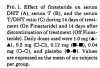
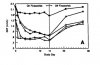
Finasteride reduces intraprostatic and serum DHT, reducing the growth rate, halting growth completely, or even reducing the size of the prostate.2 The downstream effect of 5α-R inhibition by finasteride results in altered gene expression resulting in a reduction of the expression and thus the number of androgen receptors in prostate epithelial cells. The reduction of androgen receptor expression is also correlated with prostatic epithelial cell atrophy which may be contributory to BPH relief, specifically a decrease in size.
The conversion enzyme 5α-R has three isozymes identified as 5α-R1, 2, and 3 with each performing similar functions in different tissues.4 The 5α-R2 enzyme is shown to be responsible for a majority of DHT synthesis, as opposed to the other isozymes.4
Originally, it was thought that finasteride was a competitive inhibitor with affinity for 5-α-reductase type 2, but it has been recently shown that it acts as a mechanism-based inactivator of 5α-R2. 5 This mechanism works by NADPH donating a hydride to the 1,2-ene double bond of finasteride, which then allows NADP+ to covalently bind to dihydrofinasteride at the enzyme active site, forming a NADP+ - dihydrofinasteride complex. 5 It is this bisubstrate that has affinity for 5α-R2. 5 Refer to Figure 3 for a stepwise diagram showing the mechanism-based inactivation of 5α-R2 by finasteride.
After exploring the mechanism of action of finasteride, there are possible areas of improvement in order to decrease side effects. The downstream side effects could potentially be reduced by increasing specificity for 5α-R2 so there are fewer interactions with 5α-R1. The most direct means of improving specificity would be to obtain an x-ray crystallography structure of finasteride in a 5α-R2 enzyme. The binding of finasteride to 5β-R does not result in a reduction reaction, while the binding of finasteride to 5α-R does result in a reduction reaction. As these two enzymes utilize the same cofactor, these differences in reactivity must be due to differences in enzyme structure. As the names of the two enzymes suggest, they both reduce double bonds, but add hydrogens to distinct faces of the steroid skeleton. Obtaining a structure of 5α-R in complex with finasteride and cofactor may elucidate the interaction between finasteride and 5α-R.5 This would allow for specific investigation of molecular changes that could be made to finasteride in an effort to improve specificity for this enzyme.
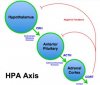
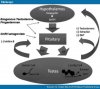
Finasteride binds selectively to 5α-R2 significantly reducing the number of adverse side effects seen. One area of improvement may be in reducing the effects of sexual dysfunction including decreased libido, impotence, and ejaculation disorder. These side effects may occur because 5α-R2 inhibits the conversion of testosterone to DHT. A secondary explanation of side effects may be the ability for small amounts of finasteride to cross the blood brain barrier. In keeping the effectiveness of the drug, changing selectivity of binding in the prostate is not a good idea. However, one proposed alteration to the molecular make up of finasteride to reduce these side effects may be to add a more polar group or steric bulk to the amide nitrogen on finasteride. In doing so, it would potentially decrease the drug's ability to cross the blood brain barrier leading to less binding in the hypothalamus, pituitary and cerebral cortex.
Summary
The affinity of finasteride with 5-beta-reductase is a result of the orientation of finasteride in the enzyme active site and H-bond interactions between finasteride and 5-Beta-reductase. Finasteride binds several reductase enzymes, with the significant clinical effects deriving from 5-alpha-reductase enzymes. The side effects of sexual dysfunction, and hypotension must be weighed against the benefit of the medication when determining its use in patients with BPH.
This is amazing! We are finally understanding the mechanism of these substances! I suggest everybody to read this. On a sidenote, the authors talk about altering fin in such a way that it doesnt cause side effects when new people take it. I hope they devise a way to heal people already suffering from the syndrome.
Also I hope somebody starts looking into isotretinoin. I dont see any research being conducted into that.