Ulcerative Colitis / IBD

HerrFisch

Well-Known Member
Messages
1,064
gbolduev post_id=5968 time=1512487476 user_id=90 said:
the only thing I am concerned with histidine about is its reaction with oxygen. Most people have hypoxia. Wouldn't that decrease oxygen bioavailability even more?

Hypoxia significantly increases histamine production. HDC expression and activity is induced by hypoxia.

Hypoxia inducing factor (HIF) increases with increasing ROS.
With lower ROS levels, HDC probably get to lower levels and histidine can be used different in the histidine metabolism

[mention]mattyb[/mention] ?
 

Helen

Well-Known Member
Staff member
Messages
5,415
HerrFisch post_id=5971 time=1512488941 user_id=114 said:
gbolduev post_id=5968 time=1512487476 user_id=90 said:
the only thing I am concerned with histidine about is its reaction with oxygen. Most people have hypoxia. Wouldn't that decrease oxygen bioavailability even more?

Hypoxia significantly increases histamine production. HDC expression and activity is induced by hypoxia.

Hypoxia inducing factor (HIF) increases with increasing ROS.
With lower ROS levels, HDC probably get to lower levels and histidine can be used different in the histidine metabolism

@mattyb ?

Histidine is in hemoglobin, that is why I was taking about it. Nothing to do with the enzymes.
 

mattyb

Moderator
Messages
833
So does histidine directly neutralize superoxide/hydroxyl? That's what it looks like to me.

I think we still have a problem here, in that if the histidine is converted to histamine, we may not get these effects. We need to disengage histidine decarboxylase, I think that is what's most important. Then all excess histidine will be shunted away from histamine. For that I think we need to reduce vitamin B6 and lysine intake - but then we have to worry about the side effects of that - anyone have any ideas from others what the possible consequences of low protein and low B6 could do?

We could overload histidine so much that HDC can't turn it all over fast enough. That's another thought. HDC will top out eventually, it's activation energy is high enough that we could overcome it, especially if B6 intake is low. Thoughts?
 

HerrFisch

Well-Known Member
Messages
1,064
Collectively, these studies show that the inhibition of EC-SOD by H2O2 is relevant to disease, and that inhibition may allow for the development and progression of diseases involving reactive oxygen species.[/b]

http://europepmc.org/abstract/med/7723345
Histidine effectively quenched hydroxyl radicals and H2O2, but not superoxide anions, in in vitro and in vivo conditions.

H2o2 increases HDC activity 10-12 fold. Mannitol and NAC blocks that activation.
Increased ROS production leads to tissue damage associated with inflammation. Superoxide dismutases (SODs) convert superoxide to hydrogen peroxide, which is then removed by glutathione peroxidase or catalase. Thus, SODs prevent the formation of highly aggressive ROS, such as peroxynitrite or the hydroxyl radical.

Im confused.
Is SOD overworking because of all histidine is made into histamine?
So no histidine left and the with increased SOD more h2o2 and ROS?

"Autoantibodies against intracellular proteins are generally not believed to be pathogenic but may reflect activation of autoreactive T cells, which could mediate target cell destruction. The identification of HDC as an autoantigen illustrates the intriguing propensity of intracellular enzymes to be the targets of B cell responses in autoimmune disorders"


[mention]gbolduev[/mention] how is histidin needed for glutathione?
If one really needs histidine for glutathione, maybe by taking cysteine, you will block HDC and get some small amounts of histidine. And this histidine (+glutamin&cystein)can be used for things like glutathione etc.
I use / used NAC for the last 2 flares. It actually reduces blood (prbly inflammation) pretty fast.


Increased expression of metallothionein in inflammatory bowel disease.
Evidence for a Potential Role of Metallothioneins in Inflammatory Bowel Diseases
 

HerrFisch

Well-Known Member
Messages
1,064
[mention]mattyb[/mention]
Is there a connection between methylation and activation of HDC?

https://www.hindawi.com/journals/grp/2012/950582/

Gut bacteria like bifido lower histamine levels too.
Maybe a H1 antagonist could be worth a try. h2r shouldnt be blocked.
But I think matty was right and its more likely to be to much histamine and therefore to much histidine.
Until HDC is lowered.

http://onlinelibrary.wiley.com/doi/10.1111/all.12330/full
 

Helen

Well-Known Member
Staff member
Messages
5,415
HerrFisch post_id=5996 time=1512496148 user_id=114 said:
Collectively, these studies show that the inhibition of EC-SOD by H2O2 is relevant to disease, and that inhibition may allow for the development and progression of diseases involving reactive oxygen species.[/b]

http://europepmc.org/abstract/med/7723345
Histidine effectively quenched hydroxyl radicals and H2O2, but not superoxide anions, in in vitro and in vivo conditions.

H2o2 increases HDC activity 10-12 fold. Mannitol and NAC blocks that activation.
Increased ROS production leads to tissue damage associated with inflammation. Superoxide dismutases (SODs) convert superoxide to hydrogen peroxide, which is then removed by glutathione peroxidase or catalase. Thus, SODs prevent the formation of highly aggressive ROS, such as peroxynitrite or the hydroxyl radical.

Im confused.
Is SOD overworking because of all histidine is made into histamine?
So no histidine left and the with increased SOD more h2o2 and ROS?

"Autoantibodies against intracellular proteins are generally not believed to be pathogenic but may reflect activation of autoreactive T cells, which could mediate target cell destruction. The identification of HDC as an autoantigen illustrates the intriguing propensity of intracellular enzymes to be the targets of B cell responses in autoimmune disorders"


@gbolduev how is histidin needed for glutathione?
If one really needs histidine for glutathione, maybe by taking cysteine, you will block HDC and get some small amounts of histidine. And this histidine (+glutamin&cystein)can be used for things like glutathione etc.
I use / used NAC for the last 2 flares. It actually reduces blood (prbly inflammation) pretty fast.


https://www.hindawi.com/journals/jdr/2015/965056/
https://www.ncbi.nlm.nih.gov/pubmed/11475329
https://www.hindawi.com/journals/mi/2009/729172/


Cysteine is converted further by histidine. CDO enzyme has iron plus histidine , same as hemoglobin. That is why when you are toxic , your hemoglobin goes down.

So I would assume taking cysteine will lower histidine
 

HerrFisch

Well-Known Member
Messages
1,064
gbolduev post_id=6056 time=1512561896 user_id=90 said:
Cysteine is converted further by histidine. CDO enzyme has iron plus histidine , same as hemoglobin. That is why when you are toxic , your hemoglobin goes down.

So I would assume taking cysteine will lower histidine

http://www.jbc.org/content/273/36/23046.full
We now show that HDC promoter activity can be stimulated by H2O2. The responses were seen at a slightly higher H2O2 concentration (10 mM) than that used in previous studies, but may reflect the greater resistance of gastric cells to oxidative stress. The responses were specific for oxidative stress pathways and reactive oxygen intermediates (such as the hydroxyl radical) as shown by the inhibition seen with N-acetylcysteine and mannitol.

Maybe even lowers histamine.

Histidine and cysteine build metallothionein, I think thats how histidine / cysteine / MT fights superoxide and hydroxyl radicals. And MT has a pretty high metal binding with copper.

Actually a lot indicates problems with "detox" in UC.
Cu is high, GSH and MT is always low.


Sorry for so much quotes and articles, but I rather post them here before I lose them in my ~110 open tabs :D
 

mattyb

Moderator
Messages
833
Like I said, we may be able to simultaneously overload and disable HDC by supping histidine and restricting B6 and/or lysine, which will neutralize ROS and help reset things. But first we need to consider the risks of restricting B6 while continuing to eat - what kind of side effects might happen from this in normal and UC/IBD people?
 

mattyb

Moderator
Messages
833
Don't know if this has been discussed yet, but smoking (which helps UC) lowers B6. This, along with smoking lowering metabolism of colon by limiting blood flow, would lower HDC activity in the colon.

https://www.ncbi.nlm.nih.gov/pubmed/2349919
 

HerrFisch

Well-Known Member
Messages
1,064
Im not sure why you want to restrict lysine.
We need b6 & copper for DAO. And in most UC cases DAO is pretty low.
I think I once got into a small flare with p5p.

Dont you like cystein / mannitol for lowering HDC?

And what about methylation and its connection to lowering histamine?
I guess there is a folate deficiency because of missing bacteria in UC.

Maybe were focusing too much on histamine.

If fission goes down and or h2o2 gets to a lower level, the increase ind HDC will likely go down too.

I think high Histamine is just a cause of mitochondria fission -> h2o2 / ROS + undermethylation
 

mattyb

Moderator
Messages
833
HerrFisch post_id=6083 time=1512571078 user_id=114 said:
Im not sure why you want to restrict lysine.
We need b6 & copper for DAO. And in most UC cases DAO is pretty low.
I think I once got into a small flare with p5p.

Dont you like cystein / mannitol for lowering HDC?

And what about methylation and its connection to lowering histamine?
I guess there is a folate deficiency because of missing bacteria in UC.

Ignore the lysine comment, I'm an idiot. I read the HDC reaction wrong haha. The active site consists of multiple amino acids, so no way to restrict it's activity based off of restriction of a single amino acid.

B6 would have been the easy target, because it is directly tied to HDC function. Mannitol/NAC could work, but it is indirect and reliant on lower ROS. Ultimately fasting is the best, IMO. Lowers everything we want lower (fission, ROS, HDC, etc.). I imagine Breuss fast would be best, with it's high levels of antioxidants and nitrogen species.

I mean ultimately if we want to lower ROS to lower HDC via supps/meds, your best bet is the selenide antioxidant drugs, but they are not approved for use yet. Ebselen and diphenyl diselenide would be the best options. They will likely be approved for other uses (tinnitus) in ~2020 so you could get them off label then through a physician. These are some of the best ROS inhibiting drugs made.

http://www.sciencedirect.com/science/article/pii/S0344033816300802
 

Orion

Well-Known Member
Messages
879
mattyb post_id=6085 time=1512572848 user_id=95 said:
They will likely be approved for other uses (tinnitus) in ~2020 so you could get them off label then through a physician. These are some of the best ROS inhibiting drugs made.

http://www.sciencedirect.com/science/article/pii/S0344033816300802

I have noticed on my longer Breuss fast that my tinnitus has not changed, its not bad, but most annoying at bedtime, too many concerts and loud music when younger. High dose aspirin actually made it worse about 1yr ago.

[mention]mattyb[/mention] what it your take of causes of it, and how would this script work on tinnitus?
 

mattyb

Moderator
Messages
833
Orion post_id=6089 time=1512573606 user_id=56 said:
I have noticed on my longer Breuss fast that my tinnitus has not changed, its not bad, but most annoying at bedtime, too many concerts and loud music when younger. High dose aspirin actually made it worse about 1yr ago.

@mattyb what it your take of causes of it, and how would this script work on tinnitus?

Ebselen is a weird drug. Has multiple actions. It was first developed as a neutralizer of H202, but since then they've found it's actually a superfast thioredoxin oxidant (accelerates the regeneration of Vit C/E and glutathione and stimulates reduction of H202 further). The current theory for why it works on tinnitus is stupid IMO (they claim it is a TNF-a inhibitor, but that's so reductive it's stupid). I don't think anyone really understands it.

https://www.ncbi.nlm.nih.gov/pubmed/12070343
https://www.ncbi.nlm.nih.gov/pubmed/16978024
https://www.prnewswire.com/news-releases/sound-pharmaceuticals-successfully-completes-its-first-phase-2-clinical-trial-with-spi-1005-involving-ipod-or-noise-induced-hearing-loss-230665181.html

It has the capacity to oxidize cysteine as well, which allows for more efficient tertiary binding of proteins, but this is much less studied. Some people are claiming it has affinity for other proteins as well, but we will see.

Ebselen will likely be one of the best drugs to come out in the 21st century. Has lots of potential for treating many neurodegenerative disorders as well.
 

HerrFisch

Well-Known Member
Messages
1,064
mattyb post_id=6085 time=1512572848 user_id=95 said:
Ignore the lysine comment, I'm an idiot. I read the HDC reaction wrong haha. The active site consists of multiple amino acids, so no way to restrict it's activity based off of restriction of a single amino acid.

B6 would have been the easy target, because it is directly tied to HDC function. Mannitol/NAC could work, but it is indirect and reliant on lower ROS. Ultimately fasting is the best, IMO. Lowers everything we want lower (fission, ROS, HDC, etc.). I imagine Breuss fast would be best, with it's high levels of antioxidants and nitrogen species.

I mean ultimately if we want to lower ROS to lower HDC via supps/meds, your best bet is the selenide antioxidant drugs, but they are not approved for use yet. Ebselen and diphenyl diselenide would be the best options. They will likely be approved for other uses (tinnitus) in ~2020 so you could get them off label then through a physician. These are some of the best ROS inhibiting drugs made.

http://www.sciencedirect.com/science/article/pii/S0344033816300802

Ever looked in selenium + cystein in connection with UC?
I mean Selenium-glutathione peroxidase is a easy way to lower h2o2 right?
http://ajpgi.physiology.org/content/309/2/G71


And selenium in diet increases intestinal microflora diversity
http://www.fasebj.org/content/25/7/2492.short

I think it would be interesting to sum up whats low and whats high in UC.
http://www.anaturalhealingcenter.com/documents/Thorne/articles/bowel_disease8-3.pdf

Vitamin A: significantly lower in UC
Vitamin E: low while active
Vitamin K: slightly lower
Folic acid: low (inhibited by sulfasalazine) with high homocysteine
Selenium: significantly lower
Copper: increased
Zinc: no changes in plasma zinc but decreased metallothionein
In a rat model, animals receiving
five-percent Plantago ovata (PO; psyllium)
seeds experienced an increase in SCFA production
(mainly butyrate), restored colonic glutathione
levels, lower TNF-α and nitric oxide synthase levels,
and recovery of damaged colonic mucosa,
when compared with untreated colitic rats.

Animal and human studies
by a group of Japanese researchers have shown
GBF to increase stool butyrate levels and inhibit
pro-inflammatory cytokine production, increase
levels of beneficial intestinal bacteria,
increase stool-forming ability in the colon, decrease
diarrhea, prevent mucosal damage, and
possibly improve the mucosal barrier of the colon.
 

Attachments

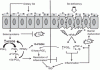
  • F1.medium.gif
    F1.medium.gif
    33.9 KB · Views: 52

Helen

Well-Known Member
Staff member
Messages
5,415
YEs selenium is a good idea. I think it is best to support the whole digestions and take all minerals and it will work. Without histidine Cysteine will not work at all. let say. vitamin A and selenium will be low , since copper is biounavailable, And those depend on its availability.
 

Helen

Well-Known Member
Staff member
Messages
5,415
What if you have low folate, and inability to break down histidine into glutamic acid.
 

Helen

Well-Known Member
Staff member
Messages
5,415
http://www.chiro.org/research/ABSTRACTS/Transdermal_Histamine_2.pdf

http://forums.phoenixrising.me/index.php?threads/my-theory-histidine-depletion.15813/

Check this out

[mention]mattyb[/mention]